How BC Regulations Are Structured
British Columbia's freshwater fishing regulations differ from most other provinces in one important way: rather than a single province-wide framework, BC uses a tiered system where general provincial rules are supplemented by regional and waterbody-specific rules. The annual Freshwater Fishing Regulation Synopsis is the primary document, and it must be read alongside species-specific schedules.
The synopsis is divided into numbered regions — Region 1 (Vancouver Island), Region 2 (Lower Mainland), Region 3 (Thompson-Nicola), Region 4 (Kootenay), Region 5 (Cariboo), Region 6 (Skeena), Region 7 (Omineca), and Region 8 (Peace). Each region contains a waterbody schedule listing specific lakes and streams by name, with their own season dates, gear restrictions, and bag limits where they differ from the general rule.
Important: In BC, if a specific waterbody is not listed in the schedule, the general provincial rule for that species applies. If the waterbody is listed, the schedule rule takes precedence over the general rule — the more specific rule always governs.
Licence Types and Fees
BC freshwater fishing licences are issued for the calendar year (January 1 to December 31). Anglers must purchase a base licence, and additional species-specific licences are required for steelhead and salmon.
| Licence Type | Resident | Non-Resident (Canadian) | Non-Resident (Foreign) |
|---|---|---|---|
| Annual Freshwater | ~$36 | ~$80 | ~$80 |
| 1-Day | ~$11 | ~$20 | ~$20 |
| 3-Day | ~$18 | ~$30 | ~$30 |
| 8-Day | ~$25 | ~$55 | ~$55 |
| Steelhead surcharge (annual) | ~$20 | ~$40 | ~$40 |
Residents 65 and older may purchase a reduced-fee senior licence. Youth under 16 do not require a licence. These thresholds are set by BC Regulations and may be adjusted in future years.
Rainbow and Other Trout
Rainbow trout (Oncorhynchus mykiss) is the most widely pursued freshwater species in BC. General provincial rules permit the retention of up to 8 trout per day (combined species), but the vast majority of productive trout lakes and streams have specific waterbody rules that are much more restrictive.
Many smaller interior lakes operate under catch-and-release only designations for wild rainbow trout, or permit retention of only hatchery-marked fish (those with a clipped adipose fin). Angling pressure on wild fish in Kamloops-area lakes, the Thompson Plateau, and the Chilcotin prompted significant tightening of single-barbless hook requirements and shortened season windows over the past decade.
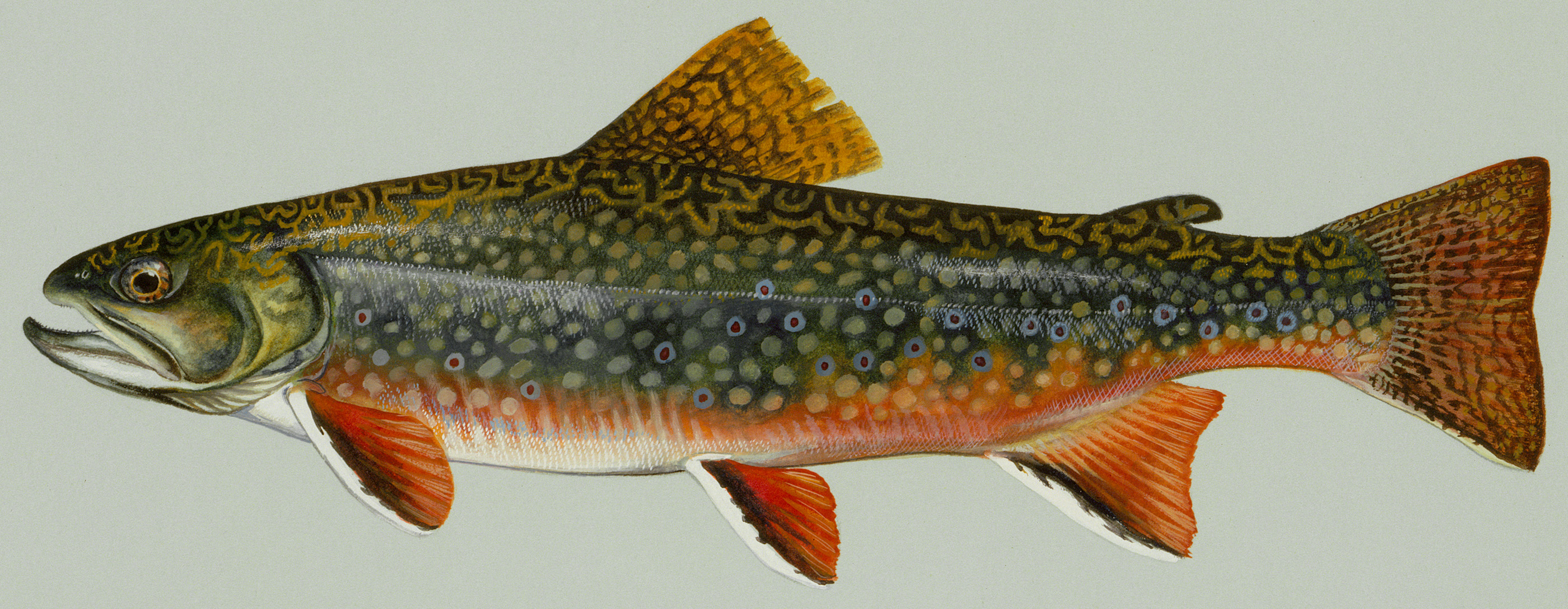
Brook trout (Salvelinus fontinalis) — introduced to many BC mountain streams, managed under species-specific rules in the regional synopsis.
Bull Trout
Bull trout (Salvelinus confluentus) are protected under much stricter rules than other trout species in BC due to documented population declines. On most BC rivers, bull trout are catch-and-release only. Retention is permitted only in specific listed waters, and limits are very low — typically one per day. Conservation status concerns have led some regions to maintain closed seasons for bull trout even in waters where other trout are open.
Steelhead Trout
Steelhead — the sea-run form of rainbow trout — require a separate steelhead licence in addition to the base freshwater licence. BC's steelhead fishery has been subject to increasing restrictions, with many rivers moving to selective gear only (single barbless hook, bait ban) and catch-and-release for wild fish.
The Thompson River and Chilcotin tributaries, historically among North America's most productive wild steelhead rivers, have been under significant protection measures since 2018. Anglers pursuing steelhead in BC should consult the current year's synopsis carefully, as river-by-river closures and gear restrictions can change from year to year based on run-size assessments.
Warm-Water Species: Bass, Pike, and Perch
Largemouth and smallmouth bass have established populations in the southern Interior and Lower Mainland, particularly in the Okanagan Valley. As non-native species in BC, bass carry no minimum size limit and no bag limit in most waters — though individual lakes may list exceptions.
Northern pike (Esox lucius) have been introduced into several Peace Region waters and are considered invasive in parts of BC. Anglers are encouraged to retain northern pike in waters where they are not native, and some lakes have no bag limit as a control measure. In contrast, Peace Region native populations are managed conservatively.

Northern pike — native to Peace Region drainages in BC, but considered invasive where introduced into Columbia and Fraser systems.
How to Read the Regulation Synopsis
The BC synopsis is organized in a consistent format across regions:
- General provincial rule: Applies to all waters in that region unless a specific exception is listed in the schedule.
- Regional exceptions: Listed waterbodies with modified season dates, bag limits, or gear restrictions.
- Waterbody schedule: Alphabetical by waterbody name within each region. Rivers are listed by main stem and tributaries separately.
When checking a specific lake or river, an angler should:
- Identify the region the waterbody falls in
- Check whether the waterbody name appears in the schedule for that region
- If listed, follow the schedule rule; if not listed, follow the general rule for that species and region
The synopsis is available for free download each year from the BC government website and in print at most sporting goods stores and FrontCounter BC offices. The current synopsis is also accessible through the BC Ministry website.
Note: Regulations change each year. The information above reflects publicly documented rules for 2024–2025. Confirm the current season's rules before fishing.